
Discover Natural Relief with Ayurvedic Treatment for Herniated Disc Bulge
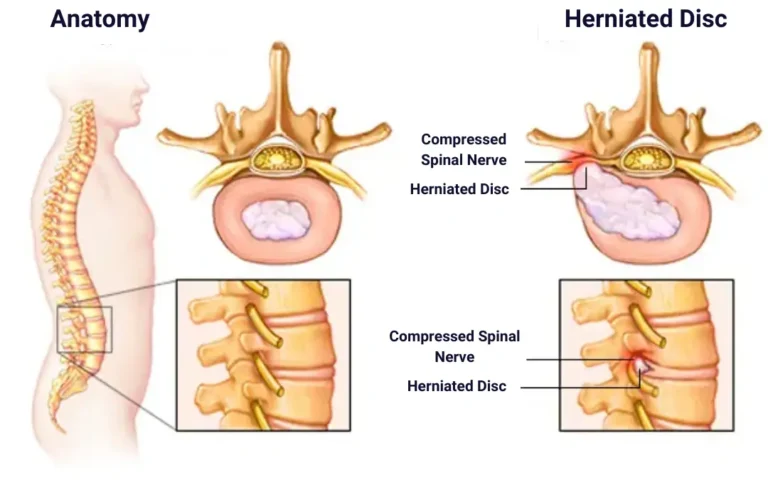
A herniated disc, also known as a slipped disc, bulging disc, disc prolapse, or ruptured disc, is a common cause of neck, back, and leg pain. It often heals on its own or with simple home-care measures.
Around 1% to 3% of the Indian population experiences a herniated disc annually, particularly affecting those aged 30 to 50. Men are twice as likely as women to develop this condition. Risk factors include prolonged sitting, being overweight, heavy lifting, repetitive motions, and smoking.
By addressing the root cause and promoting natural healing, Ayurveda provides effective solutions for managing herniated discs and improving spinal health. The L4-L5 and L5-S1 levels are the most commonly affected in the lower back, and Ayurveda offers targeted therapies — including a dedicated L4 L5 S1 ayurvedic treatment protocol — that focus on holistic recovery and long-term well-being.
Types of Herniated Discs
A herniated disc, also known as a slipped disc, bulging disc, disc prolapse, or ruptured disc, is a common cause of neck, back, and leg pain. It often heals on its own or with simple home-care measures.
Lumbar Herniated Disc:
Occurs in the lower back, causing pain, numbness, or weakness in the buttocks, legs, and feet. Most lumbar herniations occur at the L4-L5 and L5-S1 disc bulge levels, which often develop alongside lumbar spondylosis and lumbosacral spondylosis, two related conditions of the lower spine.
Thoracic Herniated Disc:
Occurs in the upper and middle back, causing pain around the ribcage and internal organs. A pattern that overlaps with thoracic spondylosis in many patients. Ayurvedic treatments for disc bulge can help alleviate these symptoms.
Central Herniated Disc:
The inner portion of the disc pushes back, putting pressure on the spinal cord, leading to weakness or numbness in the legs or arms.
Foraminal Herniated Disc:
Compresses a nerve as it exits the spinal column, causing pain, numbness, or weakness in specific areas. When this nerve compression runs down the leg, it’s usually diagnosed as sciatica.
Cervical Herniated Disc:
Occurs in the neck, causing pain, numbness, or weakness in the shoulders, arms, and hands and is closely related to cervical spondylosis, which we’ve also compared across Ayurvedic and allopathic approaches.
Symptoms Of Herniated Disc
- Pain: Sharp or burning pain in the affected area, often radiating to the arms or legs.
- Numbness or Tingling: Radiating numbness or tingling in the body part served by the affected nerves.
- Weakness: Muscles served by the affected nerves weaken, causing difficulty in lifting or holding items.
- Radiating Pain: Pain that spreads along the path of the affected nerve, often diagnosed as sciatica when it travels down the leg.
- Worsening Pain with Movement: Pain aggravated by bending, lifting, or prolonged sitting or standing.
Many people with these symptoms are surprised to find their X-rays or blood tests come back normal. This is a well-documented pattern in chronic back pain, where imaging doesn’t always match the level of pain a patient feels.
If you are experiencing back or neck pain, numbness, tingling, weakness or pain that radiates into your arms or legs, understanding your spine health can be a useful first step. The UWAY Spine Check is a simple online assessment that takes around two minutes and looks at factors such as posture, nerve-related symptoms and possible disc-related concerns. It can help you better understand your symptoms and identify whether further medical evaluation may be appropriate.
Causes Of Herniated Disc
- Age-related Degeneration: Discs lose water content and elasticity over time, making them prone to herniation.
- Trauma or Injury: Sudden forceful movements, such as in car accidents or falls.
- Repetitive Strain: Activities involving heavy lifting or prolonged sitting.
- Poor Body Mechanics: Improper lifting techniques and poor posture.
- Genetic Factors: Predisposition to spine conditions.
- Obesity: Excess weight puts stress on the spine.
Risk Factors Of Herniated Disc
- Weight: Extra stress on lower back discs.
- Occupation: Physically demanding jobs increase risk.
- Genetics: Inherited predisposition.
- Smoking: Reduces oxygen supply to discs, accelerating degeneration.
- Frequent Driving: Prolonged sitting and vibration from driving.
- Sedentary Lifestyle: Lack of regular exercise.
Is a Slip Disc the Same as a Herniated Disc?
Yes. “Slip disc,” “bulging disc,” and “herniated disc” all mean the same thing — the soft cushion between two spine bones has pushed out of place and is pressing on a nerve. Doctors often use these words interchangeably, so don’t worry if you’ve heard different terms for the same problem.
Ayurvedic Treatment for Herniated Disc
Ayurveda offers a holistic approach to treating a herniated disc, slip disc, or disc prolapse by balancing doshas, detoxifying the body, reducing inflammation, and restoring health.
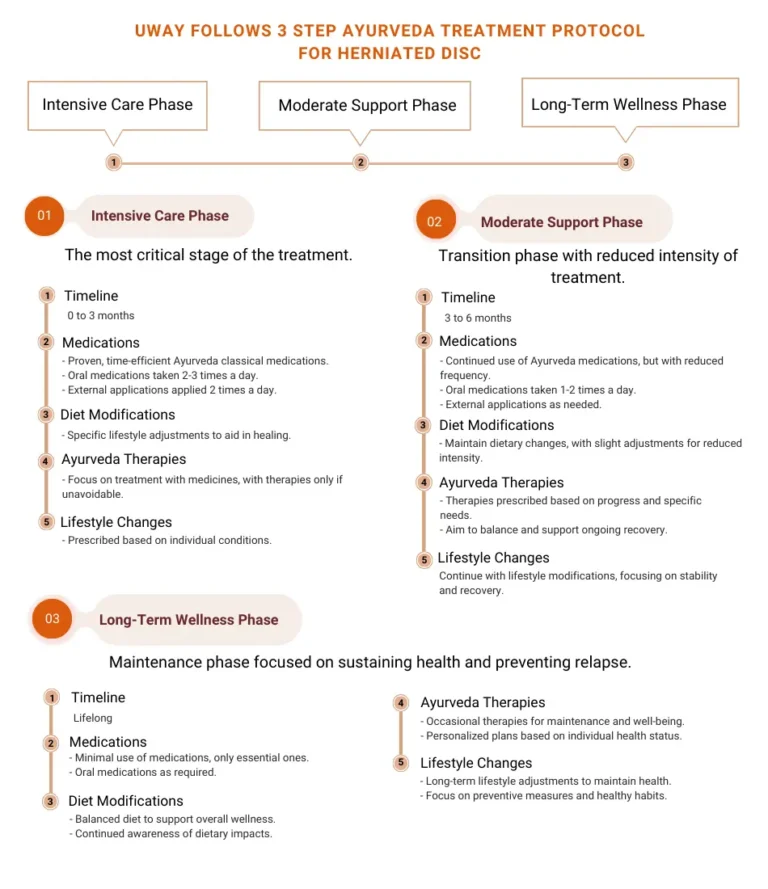
The above-mentioned image provides a high-level view of the treatment for herniated discs. The duration of each stage and the prescribed medicines can vary depending on the patient’s condition.
For herniated discs, UWAY follows three specific Ayurvedic protocols, which include:
- Dietary Modifications: Treatment involves dietary changes tailored to the underlying issues identified during diagnosis.
- Lifestyle Changes: Depending on the patient’s condition, our UWAY doctors may recommend yoga, meditation, and other lifestyle changes.
- Ayurvedic Medication: Our UWAY doctors prescribe time-tested, proven classical Ayurvedic medicines from India’s top Ayurvedic medicine manufacturers. There is no common prescription for this condition because each patient’s condition is unique.
Our UWAY doctors prescribe personalised treatment plans that combine Panchakarma (detoxification treatment), Abhyanga (oil massage), and medication, alongside broader Ayurvedic care for back pain and, in many cases, an approach specifically aimed at helping patients avoid surgery.
Ayurvedic Oil Therapy & Panchakarma for Disc Bulge
For L4-L5 and L5-S1 disc bulge — the most common levels affected — UWAY doctors combine ayurvedic oil for disc bulge therapies with internal medication. Kati Basti (a pool of warm medicated oil held over the lower back) and Abhyanga (oil massage) are commonly used to ease inflammation, while Panchakarma detox protocols like Virechana and Basti are recommended in select chronic cases.
These follow classical Kerala Ayurveda treatment protocols adapted to each patient’s MRI findings and dosha imbalance. For early-stage relief, patients can also start with a few simple Ayurvedic remedies for disc bulge at home, and those weighing their options often find it useful to compare Ayurvedic and allopathic approaches to herniated lumbar disc side by side.
Frequently Asked Questions:
No, many herniated discs heal over time with proper treatment and care.
Yes, there is a risk of recurrence, especially if underlying factors are not addressed.
Maintaining a healthy weight, using correct lifting technique, staying active, and following a personalised Ayurvedic maintenance plan (diet, yoga, and periodic Abhyanga) can help lower the risk, building on the same daily habits that support natural back pain relief.
The most common disc to herniate is the lumbar disc, specifically at the L4-L5 or L5-S1 levels in the lower back.
Consultations at UWAY can last anywhere from 15 to 30 minutes. Usually, we require most of the medical records related to the current problem and the medicines you are on currently for pre-existing conditions for diabetes, hypertension, thyroid, cardiac issues etc.
Most of the ayurvedic medications do not interfere with allopathic, homeopathic or any other system of medication. However, if there is an issue with any particular medicine, the doctor will let you know.
Some medical conditions can be completely cured by Ayurveda. Certain conditions can be managed. For certain conditions like low back pain and neck pain where disc issues are involved, treatment at UWAY can provide long-term relief to patients with minimal chances of recurrence. In age-related osteoarthritic conditions, treatment can provide effective pain relief and slow down the progression of the condition. To understand more about how Ayurveda can help you avoid surgery for a herniated disc, or to compare approaches, see our guide on Allopathy vs. Ayurveda for herniated lumbar disc.
Most Ayurvedic medicines are generally safe. If at all there is a problem with ayurvedic medication, it would be individualistic in nature and can be effectively managed by the doctor concerned.
Several published studies and case reports have documented Ayurvedic management of lumbar disc herniation, including reduction in pain and improved mobility. At UWAY, treatment decisions are based on your MRI findings and clinical assessment rather than a one-size-fits-all protocol — we recommend discussing your specific case and reports with our doctors.
Yes, disc desiccation (the age-related drying out of a disc) is addressed through the same anti-inflammatory and dosha-balancing approach used for disc bulges, since it’s closely tied to degenerative disk disease.
Quick, Convenient & Safe Healthcare
chronic conditions in the last 20 years.
How we work?
Chat with Our Medical Advisor Online
Book an Appointment with Doctor
Consult with our Experienced Doctor Online
Get Free Assistance with UWAY
Prescribed Medicines Door Delivered
Continuous Support By Medical Advisor