
Ayurvedic Treatment for Peptic Ulcer: Understanding Causes, Symptoms and Healing.
Many people walk into our clinic complaining of stomach pain, bloating, or a burning sensation after meals—without realizing that they might be dealing with a peptic ulcer. Some think it’s just acidity, while others confuse it with general indigestion. But not all stomach pain is the same. Peptic ulcers are more common than most people think, and with today’s lifestyle—irregular meals, stress, and frequent use of painkillers—the numbers are only rising. Identifying the root cause and addressing it with the right care, including Ayurvedic treatment for peptic ulcers, can bring lasting relief.
What Are Peptic Ulcers?
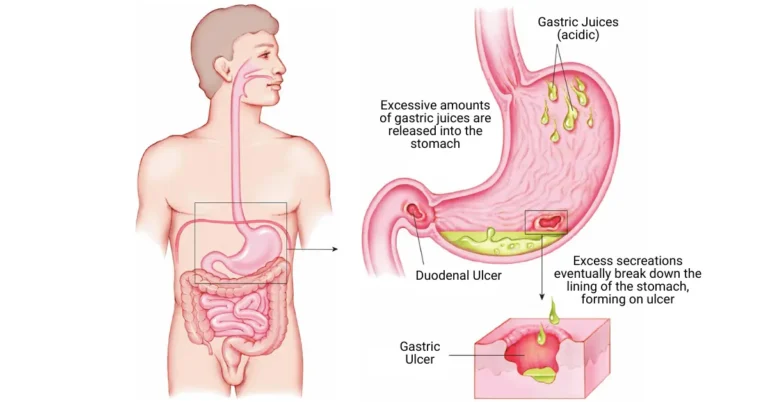
Peptic ulcers are open sores that develop on the lining of the stomach (gastric ulcer), upper small intestine (duodenal ulcer), or esophagus due to the erosion of the protective mucosal layer by stomach acid. Studies show that between 5% and 10% of people worldwide will develop peptic ulcer disease (PUD) in their lifetime. Peptic ulcers can occur at any age but are more common in middle-aged adults and men.
Types of Peptic Ulcers
“Peptic ulcer” is the umbrella term. The name depends on where the sore forms:
Gastric ulcer
In the lining of the stomach. This is what many people call a stomach ulcer.
Duodenal ulcer
In the first part of the small intestine, just after the stomach.
Esophageal ulcer
In the lower part of the food pipe.
Common Causes of Peptic Ulcers
From a modern medical perspective, the most common peptic ulcer causes include:
- Helicobacter pylori (H. pylori) infection
- Long-term use of NSAIDs (such as aspirin, ibuprofen, and naproxen)
- Excess stomach acid production, triggered by stress, alcohol, smoking, and irregular eating habits
- Dietary factors, including frequent consumption of spicy, fried, or highly acidic foods
Who Is More at Risk?
H. pylori is very common, and most people who carry it never develop an ulcer. The risk goes up when other factors are added:
- Regular use of NSAIDs, especially together with an H. pylori infection
- Smoking and heavy alcohol use
- A parent or sibling who has had ulcers
- Long-standing stress, skipped meals and irregular eating
The Ayurvedic View
In Ayurveda, peptic ulcers are primarily linked to an aggravated Pitta dosha. Pitta governs digestion and heat in the body. When imbalanced due to poor diet, stress, or lifestyle choices, excess acidity and inflammation occur, eventually leading to ulcer formation. Ayurvedic treatment for peptic ulcers , focusing on balancing the doshas, improving digestion (Agni), and strengthening the gastric mucosa.
Peptic Ulcer, Gastritis, Acid Reflux or Pancreatitis?
Upper-abdominal pain has many causes, and the symptoms overlap:
- Gastritis is inflammation of the stomach lining. An ulcer is a deeper open sore. Left untreated, gastritis can progress to an ulcer.
- GERD and acid reflux cause heartburn as acid rises into the food pipe.
- Pancreatitis causes severe upper-abdominal pain that often spreads to the back.
The type of ulcer and its cause cannot be reliably predicted from symptoms alone, so an examination is the safest way to know.
Recognizing Peptic Ulcer Symptoms
Many people dismiss early warning signs of peptic ulcers as mere acidity. However, the following symptoms indicate something more serious:
- Burning or dull stomach pain, especially between meals and at night
- Bloating and a feeling of fullness
- Frequent belching
- Heartburn and acid reflux
- Nausea and occasional vomiting
In severe cases, symptoms of bleeding ulcers may include:
Vomiting blood (which may appear red or black)
Black, tarry stools due to internal bleeding
Dizziness or fainting from blood loss
When to See a Doctor
See a doctor if you have stomach pain or burning that keeps returning or lasts more than a couple of weeks, especially if you also have:
- Unintended weight loss
- Trouble swallowing, or vomiting that won’t stop
- Pale skin, tiredness or breathlessness, which can point to anaemia
- New stomach symptoms after the age of 55
Go to the emergency room immediately if you vomit blood, pass black or tarry stools, feel faint, or have sudden severe abdominal pain. Sudden severe pain can mean the ulcer has perforated, which is a medical emergency.
Possible Complications of Untreated Peptic Ulcers
Ignoring peptic ulcer symptoms can lead to severe complications:
- Internal bleeding, which may require hospitalization
- Perforation, a life-threatening condition where the ulcer creates a hole in the stomach wall
- Digestive blockage, causing vomiting and unintended weight loss
- Anemia, due to slow, chronic blood loss
- Increased risk of stomach cancer, particularly in cases linked to H. pylori infection
How Peptic Ulcers Are Diagnosed
Your doctor will ask about your symptoms, painkiller use, alcohol and smoking, and may advise:
- H. pylori testing: a urea breath test or stool antigen test is the most accurate. A blood test is more convenient but less accurate and can’t confirm that the infection is gone. Ask your doctor whether any acid-reducing medicine or antibiotic needs to be paused before a breath or stool test.
- Upper GI endoscopy: a thin camera passed through the mouth to see the ulcer, take a biopsy and rule out other causes, including cancer. It is usually advised for older adults and for anyone with warning signs such as weight loss, anaemia or trouble swallowing.
- Blood tests: to check for anaemia if bleeding is suspected.
After treatment, your doctor may retest to confirm the ulcer has healed and the infection has cleared.
Ayurvedic Approach to Peptic Ulcer Treatment
Ayurveda aims to treat the root cause, not just the symptoms of peptic ulcers. The goal is to reduce excessive Pitta, heal the stomach lining, and improve digestion through dietary modifications, herbal remedies, and lifestyle adjustments.
1. Healing Peptic Ulcers Through Diet (Ahara)
A Pitta-pacifying diet is crucial for recovery. Recommended foods include:
- Coconut water (a natural antacid)
- Ghee with warm milk (promotes healing of the stomach lining)
- Bananas, honey, and almonds
- Buttermilk with roasted cumin and a pinch of turmeric
Food tolerance varies from person to person. If a food, including sour buttermilk, worsens your pain, tell your doctor and adjust. Diet supports healing but doesn’t replace treating H. pylori or stopping NSAIDs. The idea of food as medicine works best alongside a proper diagnosis.
Foods to Avoid:
- Spicy, fried, and processed foods
- Excess tea, coffee, and alcohol
- Citrus fruits (like lemon and orange)
- Pickles, vinegar, and excessive salt
2. Home Remedies for Peptic Ulcer Relief
Simple Ayurvedic home remedies can aid in reducing discomfort and promoting healing:
- Licorice (Mulethi) tea: Soothes inflammation and aids in ulcer healing
- Amla juice: Rich in antioxidants and helps neutralize acidity
- Aloe vera juice: Provides a cooling effect and speeds up healing
- Shatavari powder with milk: Strengthens digestion and reduces acidity
Natural doesn’t always mean safe for everyone. Licorice taken in large amounts or for a long time can raise blood pressure and lower potassium. Aloe products vary, and some act as a strong laxative, so use only the type and amount your doctor recommends. Check with your doctor before using herbal remedies if you are pregnant, breastfeeding, or taking regular medicines.
3. Classical Ayurvedic Medicines for Peptic Ulcers
Based on an individual’s constitution, Ayurveda recommends specialized formulations for ulcer healing:
- Avipattikar Churna – Reduces acidity and enhances digestion
- Kamdugha Ras – Provides cooling and relieves digestive discomfort
- Sutshekhar Ras – Effective for hyperacidity and ulcer healing
- Praval Pishti – A coral-based remedy that soothes gastric ulcers
(Note: Always consult a qualified Ayurveda doctor before taking these medications.)
UWAY Health’s Holistic Approach to Peptic Ulcer Treatment
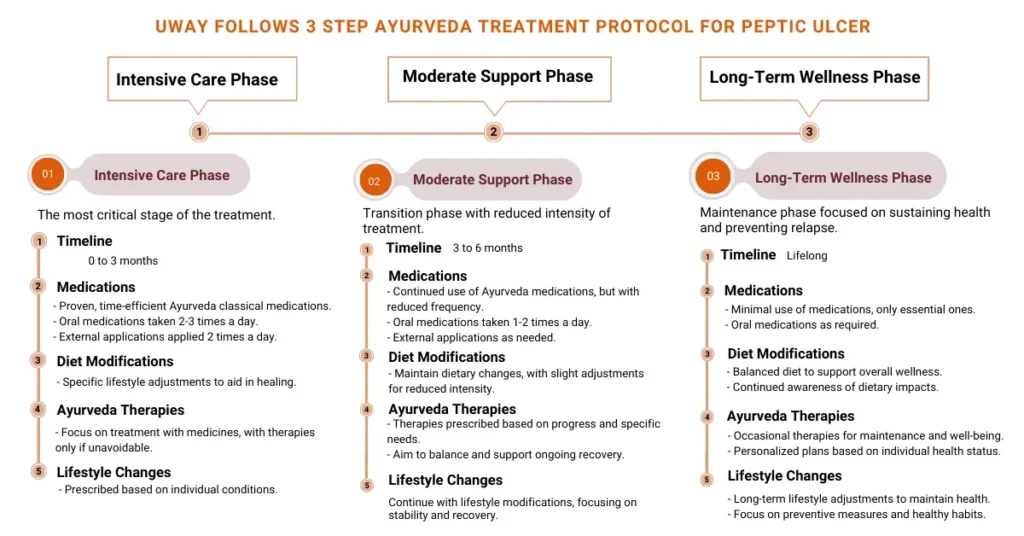
UWAY Health’s approach to peptic ulcers extends beyond symptom relief. Our treatment integrates digestive support through personalized dietary adjustments, herbal remedies, and lifestyle modifications for lasting relief. Our Ayurvedic doctors assess each patient’s condition and recommend suitable treatment protocols.
The above-mentioned image provides a high-level view of the treatment for peptic ulcers. The duration of each stage and the prescribed medicines vary based on the patient’s condition.
Lifestyle Modifications for Long-Term Relief
Adopting mindful habits can aid healing and prevent recurrence:
- Maintain a regular eating schedule
- Avoid eating under stress or skipping meals
- Limit late-night dinners
- Practice yoga, pranayama, and meditation to manage stress
- Get adequate sleep and hydration
Panchakarma Therapies for Chronic Peptic Ulcers
For chronic or recurring peptic ulcers, Ayurveda recommends specialized detox therapies:
- Virechana (Purgation Therapy): Removes excess Pitta from the body
- Takra Dhara (Medicated Buttermilk Therapy): A cooling therapy that pacifies Pitta and supports digestion
- Shirodhara (Oil Therapy): A stress-relieving treatment beneficial for stress-induced ulcers
These therapies are chosen only after a doctor’s assessment, since not everyone with an ulcer is suited to them. Our overview of Panchakarma therapy benefits and our guide on who should consider Panchakarma explain how they are selected.
How to Prevent Peptic Ulcers From Coming Back
- Avoid regular painkillers on an empty stomach, and ask your doctor before taking NSAIDs long term
- Complete the full course of H. pylori treatment if you have the infection
- Limit alcohol and stop smoking
- Wash hands and eat clean, well-cooked food and safe drinking water
- Eat at regular times and avoid long gaps between meals
- Manage stress and get enough sleep
- Get repeat or persistent symptoms checked early instead of relying on antacids
Final Thoughts
Peptic ulcers are more than a minor digestive issue—they indicate an imbalance in diet, lifestyle, and emotions. Ayurveda provides a holistic and effective approach to peptic ulcer treatment, emphasizing mindful eating, herbal remedies, and lifestyle modifications. If you’re experiencing persistent digestive issues, consult an experienced Ayurveda doctor and begin your journey toward healing from within.
FAQ's:
The pain from a gastric ulcer is usually a burning sensation felt just below the sternum (breastbone). It can last between 30 minutes to 3 hours and often worsens after eating. In some cases, the pain may feel dull and be mistaken for hunger. If the pain improves after eating and worsens at night, it may indicate a duodenal ulcer, another type of peptic ulcer.
The fastest way to heal a peptic ulcer is to address its root cause. If the ulcer is caused by an H. pylori infection, antibiotics are necessary alongside medications that reduce stomach acid. Early treatment can speed up the healing process.
Peptic ulcers can be effectively managed and prevented from recurring by:
Eliminating H. pylori bacteria if present (with antibiotics)
Reducing or avoiding NSAIDs (such as aspirin and ibuprofen)
Taking acid-reducing medications to support healing
A balanced diet, stress management, and Ayurvedic approaches can help prevent recurrence.
Bloating and belching
Heartburn and acid reflux
Nausea or occasional vomiting
Some mild ulcers may heal on their own, but most require treatment to prevent complications like bleeding or perforation. Ignoring symptoms can make the condition worse.
Ayurveda focuses on balancing Pitta dosha, strengthening digestion, and healing the stomach lining through:
A Pitta-pacifying diet (coconut water, ghee, buttermilk)
Herbal remedies (licorice, amla, aloe vera)
Detox therapies like Virechana (purgation) and Takra Dhara (buttermilk therapy)
Stress does not directly cause ulcers but can worsen symptoms by increasing stomach acid production and delaying healing.
Quick, Convenient & Safe Healthcare
UWAY is founded by doctors who have successfully treated more than 5 lakh patients with various
chronic conditions in the last 25 years.
How we work?
Chat with Our Medical Advisor Online
Book an Appointment with Doctor
Consult with our Experienced Doctor Online
Get Doorstep Deliver of Medicines
Get Free Assistance with UWAY
Continuous Support By Medical Advisor