
For many of us, coffee is part of the working day. We have a cup before opening the laptop, take a break with a colleague, or meet a friend at a café.
If you have been drinking more coffee because you feel tired, it helps to look at your sleep too. How you brew the coffee, how much you drink and when you have it are all worth checking.
Coffee can make you feel more awake. It cannot make up for lost sleep. Some brews also contain more of the coffee oils that can raise LDL cholesterol. [1] [5]
- Does a 15-bar machine make better coffee?
- What happens during coffee extraction?
- How do espresso, Americano and other brews differ?
- What can coffee do for your health?
- Can coffee raise LDL or disturb sleep?
- When should you get recurring tiredness checked?
1. Does a 15-bar machine make better coffee?
A 15-bar label does not mean the machine will make better coffee. Espresso is usually brewed at around 9 bar. The larger number printed on the box often refers to the pump’s maximum pressure. [2]
The grind, amount of ground coffee and water temperature also affect the flavour.
2. What happens during coffee extraction?
When you brew coffee, water draws caffeine and flavour compounds out of the grounds. This is called extraction. The brewing method and filter also affect the oils and fine particles that reach your cup. [2] [3] [6]
A finer grind exposes more of the coffee to water and changes how quickly the water passes through. Temperature, brewing time and the amount of water also affect the result.
You cannot judge the caffeine content by taste alone. A bitter coffee may taste stronger without giving you more caffeine.
3. How do espresso, Americano and other brews differ?
A small espresso can taste much stronger than a large mug of filter coffee. That does not tell you which contains more caffeine. The amount of coffee used and the number of shots matter. [8]
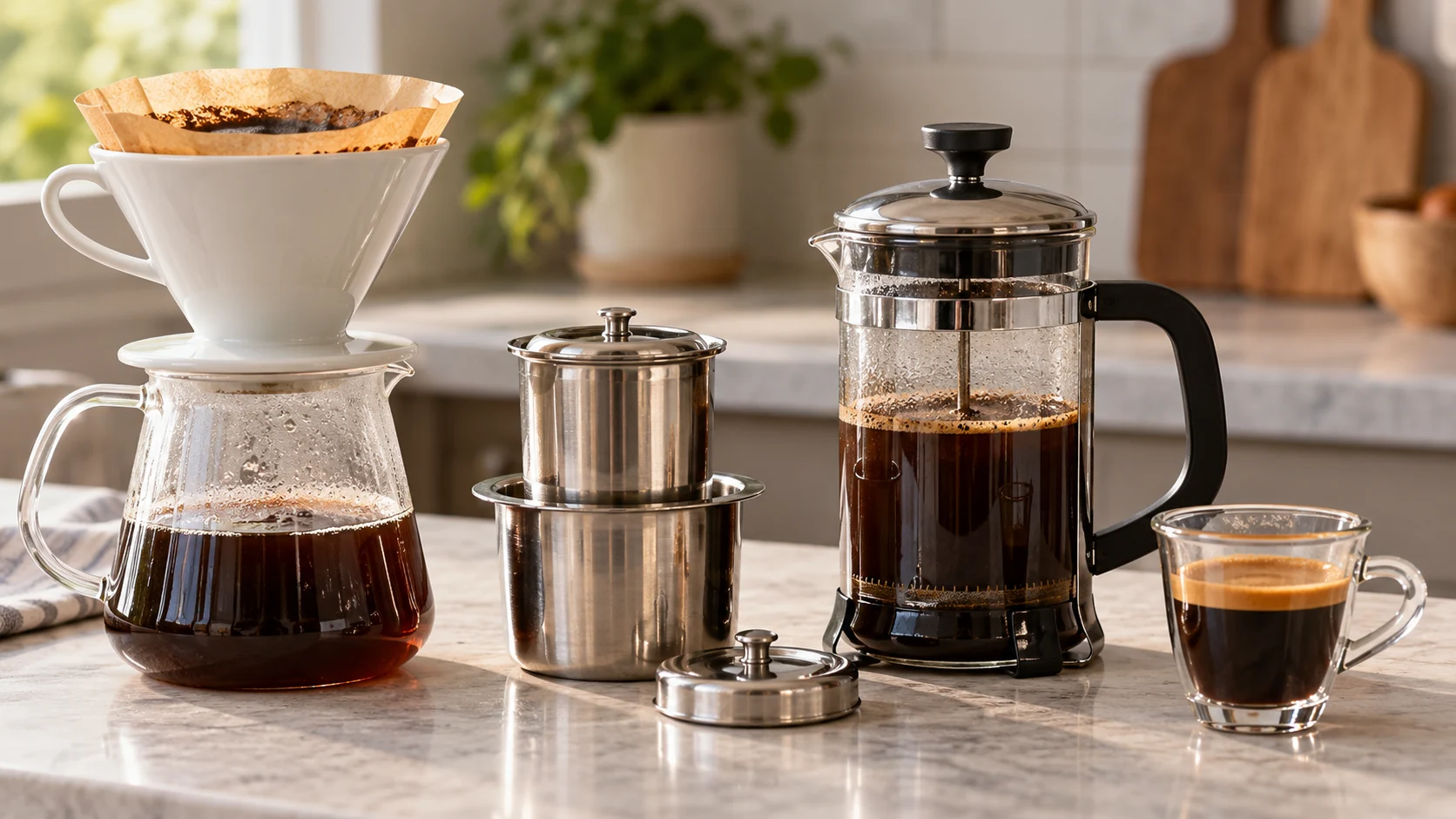
| Preparation | How it is made | What to know |
|---|---|---|
| Espresso | Hot water is pushed through finely ground coffee under pressure. | A concentrated drink. The coffee dose and number of shots affect your caffeine intake. |
| Americano | Hot water is added to a finished espresso shot. | A larger drink, with the caffeine and oils already present in that shot. |
| Lungo | More water passes through the grounds during brewing. | A longer extraction, unlike adding water after the shot is made. |
| Paper-filtered drip or pour-over | Water passes through grounds held in a paper filter. | The paper traps much of the cafestol and other coffee oils. |
| South Indian filter kaapi | A metal filter makes a decoction, usually mixed with milk. | One study found low cafestol in the Indian filter coffees tested. The amount may differ by recipe. |
| French press | Grounds steep in hot water before a metal plunger separates them. | Can contain more of the coffee compounds that raise LDL. |
| Turkish coffee | Finely ground coffee is heated with water and served without paper filtration. | Can contain more of the coffee compounds that raise LDL. |
| Moka pot | Hot water rises through the grounds in a stovetop pot. | Uses pressure, but it is a different method from espresso. |
| Cold brew | Grounds are left in cool water for several hours. | Caffeine content depends on the coffee dose, recipe and any dilution. |
| Instant coffee | Brewed coffee is dried into soluble granules or powder. | Usually contains very little cafestol. |
If you brew one espresso shot and top it up with hot water, you have made an Americano. A lungo sends more water through the grounds. Adding water afterwards changes how concentrated the drink tastes, but keeps the caffeine and oils from the shot. [10]
4. What can coffee do for your health?

Caffeine can help you feel more awake and less sleepy. That is its clearest immediate benefit. [1]
The American Heart Association’s July 2026 review described links between coffee drinking and lower risks of type 2 diabetes, heart disease and stroke. Most of the evidence followed people over time; it does not prove that coffee prevented these illnesses. [4]
There is no need to start drinking coffee for these possible benefits. And feeling more awake after a cup does not tell you why you were tired in the first place.
Freshly brewed coffee may taste better to you. That alone does not make it healthier than instant coffee.
5. Can coffee raise LDL or disturb sleep?
Coffee and LDL cholesterol
Yes, some brews can raise LDL cholesterol. Coffee contains oily compounds called diterpenes. One of these, cafestol, can raise LDL. This is separate from caffeine’s effect on alertness. [5]
A paper filter traps much of the coffee oil, reducing the cafestol in the drink. Paper-filtered and instant coffee usually contain very little of these compounds; French press, Turkish and boiled coffee can contain more. The amount in espresso varies, so the number and size of your servings are important too. [4] [6]
What about South Indian filter kaapi? A 2011 study found low cafestol levels in the Indian filter coffees it tested, despite the use of metal filters. We should not assume that every home or café recipe has the same amount. [7]
If your LDL is high, check your brewing method as well as how many cups you drink. Paper-filtered coffee may be a better choice to discuss with your doctor. Adding water or choosing decaf does not reliably remove cafestol. [4] [5]
Coffee and sleep
A late coffee can disturb your sleep, even if it helps you finish the day’s work. The dose, timing and your sensitivity all affect this. [1]
If you are sleeping poorly, try moving coffee earlier in the day and reducing the amount. Notice whether your sleep improves, rather than relying only on whether you can fall asleep after a cup.
How much caffeine is too much?
The FDA cites 400 mg a day as an amount not usually associated with negative effects for most adults. Some people notice unwanted effects at much lower amounts. It is a reference point, not a target. [8]
Counting cups can be misleading. Check the number of shots and the serving size. Include caffeine from tea, energy drinks, supplements and medicines too. [8]
During pregnancy, EFSA advises keeping caffeine from all sources within 200 mg a day. Ask your doctor for advice during pregnancy or breastfeeding, or if a health condition or medicine affects your caffeine tolerance. [1] [8]
If coffee leaves you with palpitations, anxiety, stomach discomfort or poor sleep, review the amount even if you are below that limit. If you want to cut down after regular use, reducing gradually may make withdrawal easier. [8]
6. When should you get recurring tiredness checked?
An occasional tired afternoon does not mean you are unwell. But if tiredness lasts for a few weeks, has no clear explanation or is affecting your work and daily life, book a medical consultation. [9]
Poor sleep, stress, diet and medicines may be part of the picture. Anaemia, diabetes, thyroid problems and sleep apnoea are other possible causes. Your symptoms and examination help the doctor decide whether tests are needed. [9]
Mention other changes too, such as unexplained weight loss, unusual thirst or gasping during sleep. Before the appointment, note your sleep times, when your energy drops and when you drink coffee. This gives the doctor a clearer starting point. [9]
UWAY Jeevan for working professionals
UWAY Jeevan was created for working professionals dealing with poor sleep, stress, digestive problems or low energy. It is a focused Ayurveda and Yoga programme, conducted online end-to-end by doctors.
The first step is a suitability call. For those who join, doctors assess their health and put together a personalised treatment plan. You also receive help with changes to your daily routine and support while you follow the plan.
Dr Keshavan explains more about why poor sleep, stress and digestive problems can keep coming back.
Frequently asked questions
Can black coffee raise cholesterol?
Yes, depending on how it is brewed and how much you drink. Leaving out milk and sugar does not remove cafestol. [5] [6]
Does adding water to espresso remove caffeine or oils?
No. It dilutes the drink, but the caffeine and oils from the original shot stay in your mug.
Can decaf still affect LDL?
It can. Decaf has less caffeine, but cafestol can still be present. For LDL, the brewing and filtering method still matter. [4] [8]
Does a stronger-tasting coffee contain more caffeine?
A stronger taste does not tell you the total caffeine in the cup. The amount of ground coffee, brewing recipe and serving size all count. [8]
When should I have my last coffee?
There is no one time that suits everyone. If coffee is affecting your sleep, move it earlier and cut back. Your dose and sensitivity both matter. [1]
Sources and further reading
[1] European Food Safety Authority: caffeine, alertness, sleep and intake guidance.
[2] Lavazza: espresso extraction and machine pressure.
[3] Lavazza: brewing methods, including immersion and moka.
[4] American Heart Association: explanation of its July 2026 scientific statement on caffeine.
[5] Jee et al.: coffee and serum lipids, meta-analysis of randomised controlled trials.
[6] Gross et al.: measured cafestol and kahweol in different coffee brews.
[7] 2011 study: coffee preparations in India, Singapore and Indonesia and diterpene content.
[8] US Food and Drug Administration: caffeine quantities, sensitivity and adverse effects.
[9] NHS: tiredness and fatigue, possible causes and when to seek assessment.
[10] Lavazza: the difference between lungo and Americano.
Sources checked on 23 October 2026. This is general health information. Speak to a doctor about symptoms that persist or affect your daily life.