- Written by Dr P. T. Keshavan Nambisan, Co-founder and Medical Director, UWAY Health
Many people who speak to us have already tried several things for their health.
Someone struggling with stress may have tried meditation, yoga, breathing exercises or counselling. Someone with recurring bloating or heaviness may have changed diets, stopped eating certain foods, taken supplements or joined a gut health program.
Some of these efforts may have helped for a period. But once normal work and family routines returned, the earlier problem also returned.
The person is then left wondering why the improvement did not continue.
During our consultations at UWAY Health, we have been hearing this question more often. It was one of the important reasons we developed UWAY Jeevan.
When there is no single explanation
UWAY primarily works with people who have chronic and complex health concerns. Through our online and offline consultations, we also meet people who do not fit easily into one category.
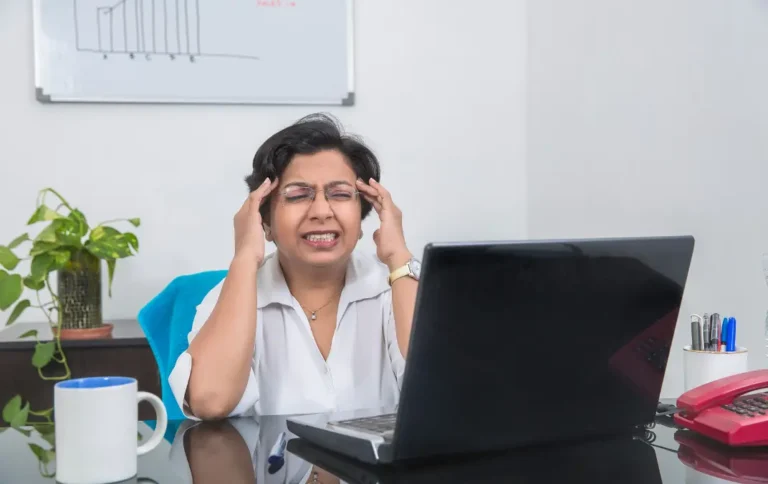
They may report disturbed sleep, low energy, digestive discomfort, poor concentration, irritability or recurring body pain. Some have undergone appropriate medical investigations, but the findings may not fully explain the extent of the discomfort they experience.
This does not mean that the symptoms are imagined. It also does not mean that they can automatically be attributed to stress or lifestyle.
Persistent or unexplained symptoms require proper medical assessment. Investigations are important for identifying or ruling out conditions that may require treatment.
However, an investigation is designed to answer a specific medical question. A normal X-ray or scan may rule out certain structural problems, but it does not necessarily tell us how the person is sleeping, eating, working, recovering or managing continuous mental pressure.
In these consultations, the person may not always have one major complaint. Instead, several smaller difficulties have started affecting daily life together.
Sleep is no longer refreshing. Energy falls during the day. Digestion becomes unpredictable. The mind remains occupied even after work has ended.
The person is functioning, but not feeling fully well.

Life has changed, and the body is trying to keep up
Technology has improved our lives in many ways. It has made information, communication, work and healthcare more accessible.
But it has also changed the pace at which people are expected to function.
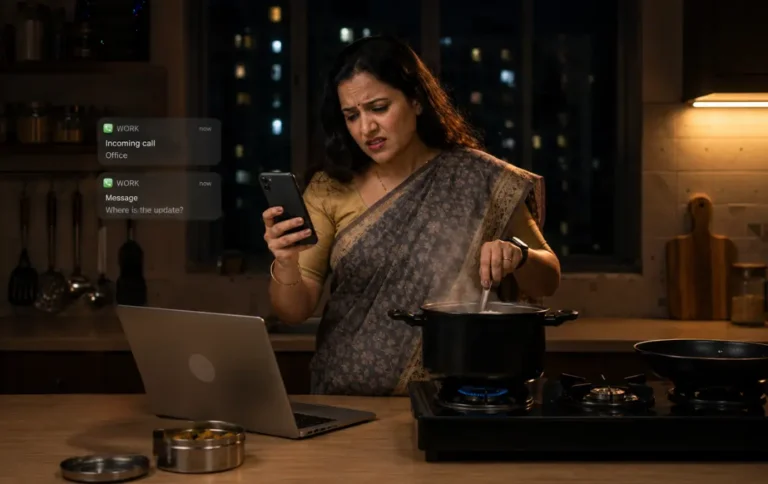
For many professionals, the working day does not have a clear ending. Calls, emails and messages continue into the evening. People eat while attending meetings, check their phones during short breaks and return to screens before going to sleep.
Electronic media use has been associated with poorer sleep quality and increased sleep problems, although the effect varies depending on the type, timing and pattern of use. The research shows an association; it does not mean that screens alone explain every sleep problem.
The nature of work is also changing. Artificial intelligence can improve performance and working conditions, and many workers and employers are positive about its potential. At the same time, concerns about future job loss and changing skill requirements are real.
This creates a situation where people feel they must remain constantly available and continuously update themselves.
The pressure may not always be visible. The person continues working and attending to responsibilities. But regular sleep, meals, physical movement and time for recovery gradually become less consistent.
The World Health Organization identifies excessive workloads, low job control and job insecurity as risks to mental health. It estimates that depression and anxiety result in around 12 billion lost working days globally every year.
These figures relate to diagnosed mental health conditions and should not be used to label every stressed or tired person. But they show that the effect of modern work on health and functioning cannot be ignored.
Why treating one complaint may not be enough
People commonly think of sleep, digestion, energy and stress as separate problems.
They may approach one program for sleep, another for gut health and another for stress.
But these areas can influence one another.
Poor sleep may affect energy, appetite, concentration and food choices. Irregular meals and digestive discomfort may make it difficult to remain active and comfortable through the day. Continued mental pressure may affect sleep and daily routines.
This does not mean that every digestive complaint is caused by stress, or that every low-energy state begins with poor sleep. Each complaint must be understood properly.
The point is that correcting one visible issue may not be enough when several parts of daily functioning have been disturbed.
For example, a person may start a strict diet for bloating. The food restriction may temporarily reduce certain symptoms. But if the person continues eating at irregular times, sleeping poorly and working without adequate breaks, the overall improvement may not continue.
Similarly, meditation may help a person settle the mind. But it may have a limited effect if the person is sleeping late, consuming stimulants through the day and remaining connected to work until bedtime.
The diet or meditation is not necessarily wrong. It may simply be addressing only one part of a larger situation.
Why some wellness changes are difficult to continue
The wellness sector has expanded rapidly. According to the Global Wellness Institute, the global wellness economy reached an estimated US$6.8 trillion in 2024.
This growth has given people access to many useful services. It has also created a competitive market in which programs need to attract attention and differentiate themselves.
That can encourage simple and strong promises: one diet, one exercise method, one supplement, one cleanse or one daily practice.
It would be incorrect to say that wellness programs in general are ineffective or harmful. Many programs are professionally conducted and can be beneficial.
The concern is with approaches that are too standardised, too restrictive or too demanding for the person following them.
A routine may look good as a 21-day or 30-day challenge. But it may be difficult to continue alongside work, travel, family responsibilities and existing health concerns.
A person who is already tired may be given an intensive exercise routine. Someone with digestive discomfort may remove several foods without adequate guidance. A person struggling to manage time may be asked to add many new practices to the day.
When the person cannot continue, they often believe they have failed.
But lack of discipline is not always the reason.
The plan may not have been suitable for the person’s health, daily routine or ability to sustain it.
Ayurveda does not look at an intervention separately from the individual receiving it. The same food, exercise, daily routine or practice may not be suitable for everyone in the same way.
This is where medical guidance becomes important. A doctor must consider not only what may help, but also what is unnecessary, unsuitable or too much for the person at that point.
What we started noticing at UWAY
Through our consultations, we broadly saw two different needs.
Some people had medical conditions requiring individual diagnosis, investigation and treatment. Supporting chronic and complex health concerns continues to be a major focus of UWAY Health.
We also met people who did not appear to require an intensive treatment program, but whose daily health had gradually become disturbed.
They were still working and managing their responsibilities, but sleep was not refreshing, digestion was inconsistent, energy was unstable and the mind rarely settled.
Many had already tried different things. What they lacked was not information or motivation.
They needed someone to examine the different concerns together and decide what was actually relevant for them.
They also needed changes that could work within normal life rather than requiring them to temporarily withdraw from it.
This led us to develop UWAY Jeevan.
Why we developed UWAY Jeevan
UWAY Jeevan is a 30-day online Ayurveda program conducted end to end by doctors, with a dedicated care team supporting participants throughout.
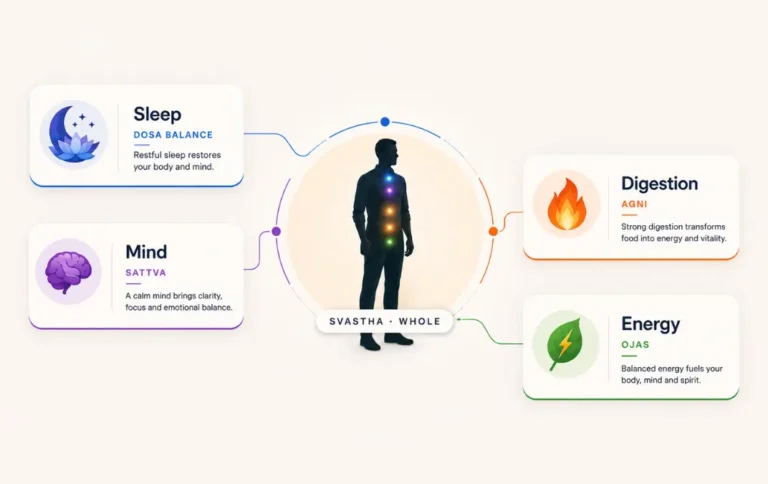
The program looks at four connected areas:
Sleep, energy, digestion and mind.
These areas are assessed together, but Jeevan does not assume that every problem has the same cause or that every participant needs the same plan.
The doctors first understand the person’s concerns, health background and daily routine. They then decide which changes may be relevant.
Depending on the individual, this may include guidance related to food, meal timings, sleep, daily routine, physical activity, counselling, mind programming, yoga, breathing practices, meditation or other Ayurveda-based support.
These are tools available to the doctors. Jeevan is not simply a yoga, meditation, diet or counselling program.
Not every participant needs every tool. The intensity and number of changes must also be manageable.
Three doctors lead different areas of the program, and another doctor is available for additional clinical support when required. The purpose of this team structure is to avoid looking at the participant’s concern through only one method or one narrow area.
The objective is not to create an ideal lifestyle for 30 days.
It is to identify the important disturbances, make a limited number of coordinated corrections and help the person continue those changes after the program.
Jeevan is not the answer to every health concern
Jeevan is not intended to replace medical investigation or treatment.
People with persistent pain, severe fatigue, significant digestive complaints, major sleep problems, unexplained weight changes or serious mental health concerns may require individual evaluation and specialist care.
The first responsibility of the medical team is to recognise when a wellness program is not appropriate.
Jeevan is meant for people whose sleep, energy, digestion and mind have gradually become disturbed, but who are able to participate in a structured, doctor-guided wellness program.
Many such people keep asking what else they should try.
In our view, the better starting point is to understand why the earlier efforts did not continue.
- Was only one complaint addressed?
- Was the routine too strict?
- Was it difficult to fit into normal life?
- Were different concerns being handled separately even though they were affecting one another?
UWAY Jeevan was developed to examine these questions and help people make practical changes under the guidance of doctors.
About Author

Dr P T Keshavan Nambisan
Dr. P.T. Keshavan Nambisan represents the 5th generation of an illustrious family of traditional Vaidyas of the Old Malabar Region of Kerala. Dr. Keshavan graduated BAMS from Rajiv Gandhi University of Health Sciences.